
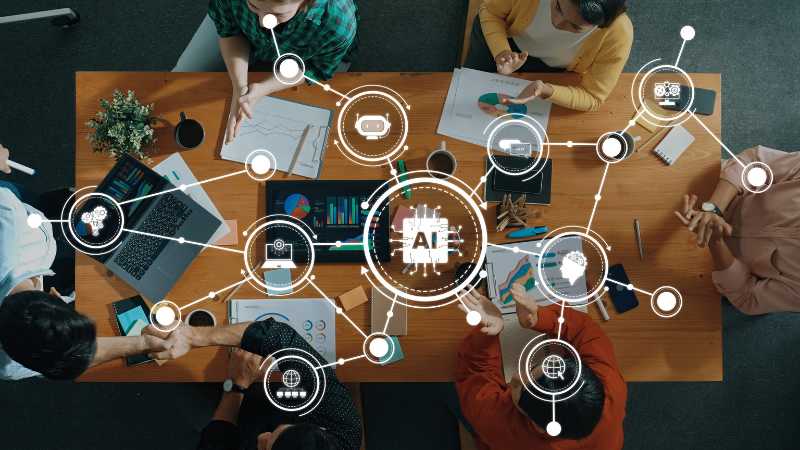
Artificial Intelligence (AI) is no longer something reserved for large technology companies. From drafting emails and analysing data to managing recruitment processes and customer enquiries, AI tools are becoming increasingly common in workplaces of all sizes. For employers, the potential benefits are significant, but so too are the risks.
As businesses look to embrace new technologies, understanding how AI can support your organisation, while ensuring it is used responsibly and lawfully, is becoming increasingly important.
The opportunities AI can bring
Many employers are already using AI, whether intentionally or through software that includes AI-powered features. When used effectively, AI can help businesses improve efficiency, reduce administrative burdens and free up employees to focus on higher-value work.
For example, AI can assist with:
- Drafting correspondence and reports
- Summarising meetings and producing notes
- Analysing large volumes of data
- Supporting customer service functions
- Streamlining recruitment processes
- Managing routine administrative tasks
These tools can save time and increase productivity, particularly for businesses where employees spend a significant amount of time on repetitive tasks.
AI can also provide valuable insights by identifying patterns and trends that may not be immediately obvious. This can support better decision-making across areas such as workforce planning, performance management and business strategy.
The risks employers should be aware of
While AI offers many advantages, it is not without risks. Employers should be cautious about relying too heavily on AI-generated outputs without appropriate oversight.
One of the most common issues is accuracy. AI systems can produce convincing content that is incorrect, misleading or incomplete. Employees may assume information generated by AI is reliable when, in reality, it requires careful review. While AI systems can streamline tasks and reduce the time they take, all AI-generated content should be carefully checked to ensure it is accurate before it is used.
Confidentiality is another key concern. Inputting sensitive company information, client data, employee data or personal information into public AI platforms could potentially create data protection risks. Employers should ensure employees understand what information can and cannot be shared with AI tools. Employers should have a clear understanding of the confidentiality and data protection safeguards offered by the AI systems they use, as these can vary between different providers. There should be a workplace AI policy which sets out which systems employees may use, what information may be entered and the safeguards they must follow.
There are also intellectual property considerations. AI-generated content may incorporate material from a variety of sources, creating uncertainty around ownership rights and the risk of copyright infringement in some circumstances. Employers should therefore ensure that AI-generated content is reviewed before use, especially in circumstances where it may be published or used externally.
AI and recruitment
Recruitment is one area where AI is becoming increasingly popular. Employers may use AI to screen CVs, rank candidates or even assist with preliminary interviews. AI can also be used to search applications against particular criteria, but employers should ensure those criteria are appropriate, relevant and applied fairly.
While these tools can make recruitment processes more efficient, they can also create risks if not used carefully. AI systems may unintentionally perpetuate bias if they are trained on data that reflects historic discriminatory patterns. AI can also make mistakes or identify patterns that the employer may not be aware of, potentially exposing the employer to discrimination claims or other legal risks.
Employers remain responsible for recruitment decisions, even where AI is involved. Any recruitment process should be regularly reviewed to ensure candidates are being assessed fairly and consistently. Each decision and the reasoning behind it should therefore be reviewed rather than accepted solely because it was generated or recommended by an AI system. Human oversight remains essential, and AI should support decision-making rather than replace it entirely.
Employers should also remember that information about candidates is personal data. Confidentiality and data protection obligations therefore continue to apply, even where the candidate has not become an employee.
Managing employees and workplace decisions
While these tools can provide useful insights, employers should exercise caution where decisions affect employees directly. Overreliance on automated decision-making may create legal risks, particularly where important employment decisions are made without proper consideration of the individual circumstances involved.
For example, if AI is used to support decisions on recruitment, promotion, performance management or redundancy, inaccurate or biased outputs could lead to unfair outcomes and potential discrimination claims. An AI system may assess the information as it is available, and would not necessarily consider the individual employee’s circumstances like a human could. Employers should also ensure that any use of AI complies with data protection obligations where employee information is being processed.
Ultimately, responsibility for employment decisions remains with the employer, so AI should be viewed as a useful supporting tool rather than a replacement for professional judgement.
The importance of an AI policy
As AI becomes more widely adopted, employers should consider implementing a clear workplace AI policy.
A well-drafted policy can help employees understand:
- Which AI tools may be used
- Appropriate and inappropriate uses of AI, including when it can and can’t be used
- Data protection and confidentiality requirements
- Expectations around checking and verifying AI-generated content
- The consequences of misuse
- When the use of AI must be disclosed
- The selected individual for employees to contact should they have any questions or concerns about the use of AI
Training is equally important. Employees should understand both the benefits and limitations of AI, enabling them to use these tools effectively and responsibly. Training should also cover the employer’s AI policy, approved systems, confidentiality and data protection requirements, and it is not allowed to be used.
Having clear guidance in place can help reduce risk while allowing your business to take advantage of the opportunities AI presents.
Looking ahead
AI is likely to become an increasingly common part of working life. Businesses that embrace innovation while maintaining appropriate safeguards are likely to be best placed to benefit from the efficiencies and opportunities these technologies can offer.
However, AI should not be viewed as a replacement for human expertise, judgement and oversight. Instead, it should be seen as a tool that supports employees and enhances efficiencies when used appropriately.
Support from our Employment Law Team
Adopting new technology can bring significant benefits, but it is important to ensure it is being used appropriately within your organisation. Our Employment Law team can provide clear, practical guidance on the employment law issues associated with AI, including discussing how you use AI as an employer, helping you to develop policies that apply to your workplace and use of AI systems, training employees and managing risks that may arise.
Tel: 01245 893400 | 01702 410880
Email: info@backhouse-solicitors.co.uk
Visit our Chelmsford office: 17 Duke Street, Chelmsford, Essex, CM1 1JU
Visit our Leigh-on-Sea office: 105 Broadway, Leigh-on-Sea, Essex, SS9 1PG
Or send us a message through the Contact Us page on this website